
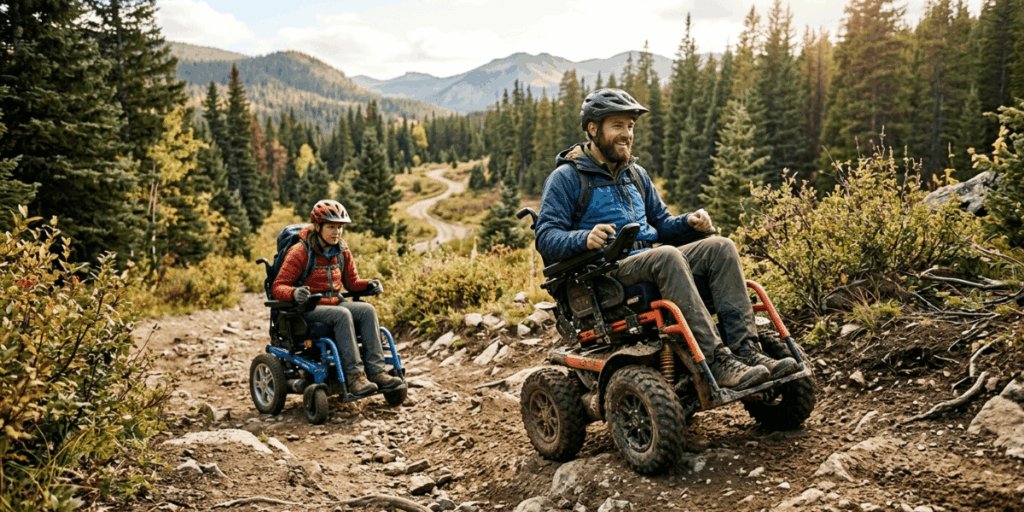
A power wheelchair built for smooth floors behaves differently once it reaches grass, gravel, or a bumpy trail. Outdoor ground puts more stress on a chair’s motors, tires, and frame than a hallway ever does. The difference between 4-wheel-drive and 2-wheel-drive power chair models comes down to one thing: how much of the wheelbase actually receives power. Four-wheel drive powers all four wheels at once, while two-wheel drive relies on just two motors.
That single choice affects traction, comfort, and battery life on outdoor trips. The sections ahead explain both systems clearly so you can match your chair to your daily routine and the ground you cover most.
Best All-Terrain Power Wheelchair for Outdoor Use: Key Features to Check
A closer comparison starts with the core features that separate indoor chairs from outdoor ones.
Stronger Motors for Rough Ground
Outdoor terrain creates far more resistance than a flat floor ever will. A power wheelchair headed outside needs higher-wattage motors to keep moving across grass, dirt, and inclines. Weak motors stall quickly once the ground turns soft or uneven.
Reinforced Frames That Handle Impact
Bumps, roots, and curbs put real stress on a wheelchair frame. A reinforced frame resists cracking and bending under that pressure, and riders who spend time outdoors need a build made from heavier materials than a standard indoor model.
Larger Tires for Better Grip
Small, hard tires work fine indoors but slip easily on loose dirt or wet grass. Larger, wider tires spread weight across a greater surface area, improving grip on soft or slippery ground. Low-pressure tires absorb small rocks and dips without jarring the rider.
Higher Ground Clearance
Ground clearance protects the underside of a wheelchair from rocks, roots, and uneven dips. A chair sitting too low gets stuck on rough trails. Three to four inches of clearance gives enough room to clear small obstacles without dragging.
Suspension Built for Bumps and Slopes
Suspension absorbs the shock of rough ground before it reaches the rider. Chairs with independent suspension on each wheel maintain better contact with uneven surfaces, reducing strain on the joints and spine during longer outdoor trips.
Difference Between 4-Wheel Drive and 2-Wheel Drive Power Chair
It starts with understanding how each drivetrain delivers power to the wheels.
Four-wheel drive sends power to all four wheels at once.
This setup gives each wheel its own motor and distributes traction evenly across the chair. Sand, mud, and gravel become far easier to cross when all four wheels pull together, and riders get steadier climbs on hills with better control on loose ground.
Two-wheel drive relies on two motors, not four.
Power comes from the front or rear wheels while the other set rolls freely. This design costs less to build and repair, and it performs well on packed trails or mild grass; it falls short on sand, deep mud, and steep slopes.
Traction varies depending on how power is delivered to the wheels.
Four-wheel drive spreads grip across the entire chassis so no single tire carries the full load. Two-wheel drive puts more strain on fewer tires, which can cause slipping on loose or wet surfaces; that gap becomes clear the moment the ground turns soft or uneven.
Turning radius differs between the two setups.
Four-wheel-drive chairs sometimes need more room to turn because of their added components. Two-wheel-drive models turn tighter, which helps indoors and in smaller spaces. That difference matters most in narrow hallways or compact homes.
Battery drain looks different across the two drive types.
Four motors pulling power at once drain a battery faster than a two-motor setup. Two-wheel drive stretches a single charge further, especially on flatter ground, so planning charge time helps avoid running low mid-trip.
Weight and portability shift depending on drive type.
Four-wheel-drive chairs carry extra motors and components, adding noticeable weight to the frame. Two-wheel-drive models are lighter and easier to transport in a car or van; that weight difference matters most for riders who load their chairs regularly.
Redman’s Power Chair Repair knows drivetrains inside and out. Our Tucson technicians service every 4×4 all-terrain electric wheelchair with skill and care, covering motors, tires, and steering alike. Call today and get your chair running strong again!
4WD vs 2WD Power Wheelchair Comparison for Everyday Use
Daily habits and typical routes matter just as much as raw power, so matching your drivetrain to your everyday travel needs should come first.
Four-wheel drive adds muscle for hills, long rides, and rough ground. It stays steady when the path turns bumpy and keeps its footing on a slope. This setup comes with more parts and a higher price tag, but it pays off with extra strength and traction outdoors; charging habits matter more with this option since it draws more battery power over time.
Two-wheel drive holds up well indoors and on flat paths, though it loses some traction once the ground gets tough. It turns tighter, moves more easily through narrow doorways, and usually costs less to buy and fix. It holds its charge longer too, since it runs only two motors; this makes it a solid pick for shorter trips around the neighborhood or local parks.
The difference between these models becomes clear the moment you compare a normal week of errands against a weekend outdoors. Small daily habits point toward the setup that will serve you best.
Which Power Wheelchair Is Best for Rough Terrain
The right pick depends entirely on the terrain a rider typically crosses.
Sand and beach terrain call for Four Wheel Drive.
Loose sand shifts under any tire without steady power on all sides. Four-wheel drive spreads traction across every wheel, which keeps the chair from sinking; this makes it a stronger match for beach outings. Wider, low-pressure tires add even more float on soft sand.
Loose gravel paths still need strong traction.
Gravel shifts and rolls under tires just like sand, though usually not as deep. Four-wheel drive holds steadier here, especially on sloped gravel paths, and a wider tire tread further improves grip on loose stones.
Steep trails demand extra motor power.
Hill climbs pull hard on any drivetrain, and four-wheel drive answers with power from every wheel. Two-wheel drive can lose momentum partway up a steep grade, so riders who frequent hilly areas should weigh this difference early.
Wet grass and mud need better grip.
Mud and wet grass turn slick fast, and traction becomes the deciding factor. Four-wheel drive spreads grip across four contact points instead of two, reducing slippage. Cleaning tires after these rides also helps keep traction sharp.
Rocky, uneven ground favors reinforced frames.
Rocks and roots test a frame just as much as a motor. A reinforced frame keeps the chair steady while the drivetrain handles traction underneath; skipping this check can lead to costly repairs down the road.
Packed dirt trails work well with either drivetrain.
Firm, packed dirt gives both drive types a fair shot at solid performance. Two-wheel drive handles this ground with ease and uses less battery, making packed dirt a practical terrain for most riders.
Snow and icy patches call for low-pressure tires.
Snow and ice reduce grip no matter which drivetrain a chair uses. Low-pressure tires paired with four-wheel drive offer the steadiest ride in these conditions, though two-wheel drive can still handle light snow on flatter routes. Extra caution helps on icy patches regardless of the setup.
Mixed indoor and outdoor routes may suit two-wheel drive.
Riders splitting time between home, sidewalks, and short outdoor trips do not always need the full strength of four-wheel drive. Two-wheel drive keeps things lighter, cheaper, and easier to store; this balance suits riders who value ease and convenience over raw outdoor power.
Conclusion
A choice between four-wheel drive and two-wheel drive depends on real habits: the ground covered each week, the distance traveled, and the comfort needed at home and outdoors. Four-wheel drive rewards sand, mud, and steep trails with steady power and grip. Two-wheel drive stays lighter, cheaper, and easier to maneuver for daily errands and shorter outdoor routes. Neither option beats the other outright; the right pick depends on where and how far a rider plans to go. Knowing how to choose an off-road power wheelchair starts with an honest look at daily terrain and routine.
Redman’s Power Chair Repair keeps Tucson riders moving with fast, honest service on every drivetrain style. Our technicians handle routine tune-ups and full 2-wheel-drive off-road power wheelchair repairs with equal care. Reach out today and keep your independence rolling forward.